
Receding gums rarely correct themselves. Once gum tissue pulls away from the tooth, the root surface stays exposed and the lost tissue does not grow back on its own. Two procedures are used to rebuild the gum line: the traditional gum graft and the Pinhole Surgical Technique. Both can cover exposed tooth roots and stop gum recession from getting worse, but they work in very different ways. The better choice for you depends on how much recession you have, how much healthy tissue remains to work with, and how much recovery time you can manage.
Why Receding Gums Need Treatment
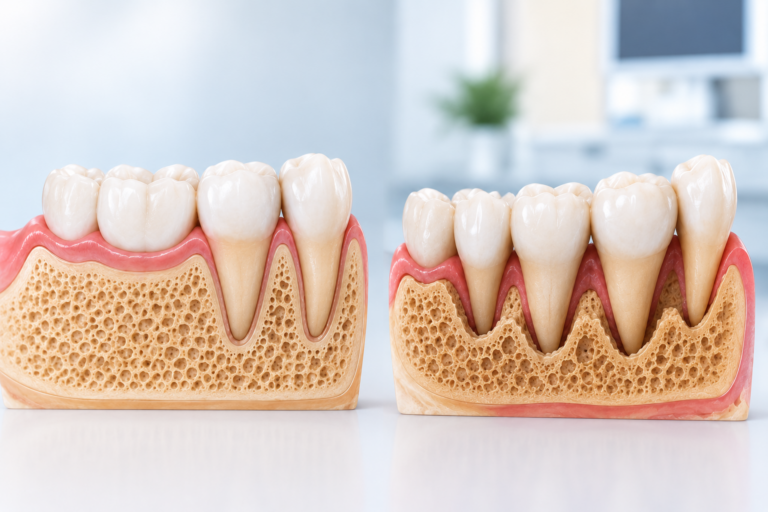
Gum recession is common with age, and it is often tied to the acceleration of periodontal disease. Even when treatment successfully stops active gum disease, the recession does not necessarily reverse. Lost tissue needs a more intensive response, such as grafting, to restore the natural gum line.
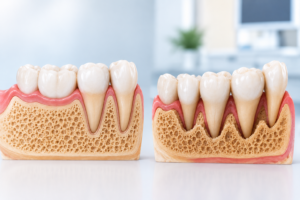
There is a reason periodontists treat recession rather than simply watch it. When gum tissue is missing, tooth roots are exposed to infection and damage, and the jaw bone that supports the teeth can be put at risk. Exposed root surfaces also tend to be more sensitive and more vulnerable to decay, because they lack the protective enamel that covers the visible crown of a tooth. Covering those roots protects both the teeth and the bone beneath them.
What a Traditional Gum Graft Involves
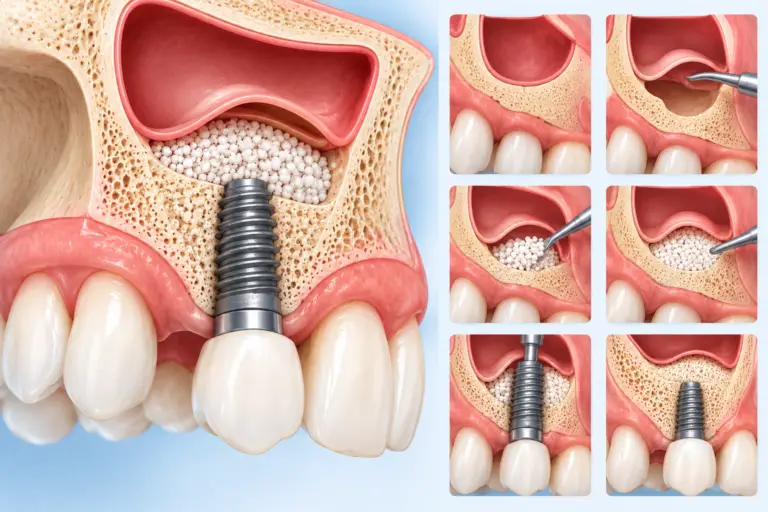
A gum graft rebuilds the gum line by adding tissue to the area where the gum has pulled back. The periodontist typically harvests a small amount of tissue, often from the roof of the mouth, and places it over the exposed root. The graft is secured with sutures while it heals and integrates with the surrounding gum.
The trade-off is straightforward. Gum grafting is effective and long-lasting, which is why it has been the standard approach for decades, but it can also be invasive. A graft creates two healing sites: the recipient site where the new tissue was placed, and the donor site where it was taken. That second site is often the part patients find most uncomfortable during recovery. Connective tissue grafting is the version most commonly studied in clinical research and the one most often compared with newer techniques.
What the Pinhole Surgical Technique Involves
The Pinhole Surgical Technique, also called the Chao Pinhole Surgical Technique, is a minimally invasive option for treating gum recession. Rather than adding donor tissue, the periodontist creates tiny entry points in the gum near the receding area, then uses specialized instruments to loosen the existing gum tissue and move it down over the exposed root. Collagen may be added to support the repositioned tissue as it heals.
Because the technique relies on those small entry points, it is described as incision-free and suture-free. There is no scalpel incision, no stitching, and no donor site on the roof of the mouth. Several teeth can often be treated through a small number of entry points in one appointment, though that depends on the individual case and is something your periodontist will assess.
Gum Graft vs Pinhole Technique at a Glance
| Feature | Traditional gum graft | Pinhole Surgical Technique |
|---|---|---|
| Tissue source | Donor tissue, often from the roof of the mouth | Existing gum tissue, repositioned; collagen may be added |
| Incisions | Yes | Tiny entry points only |
| Sutures | Typically used to secure the graft | None required at the entry points |
| Donor site | Yes | No |
| Recovery | Longer, with donor site discomfort | Reported to be very fast |
| Track record | Long established | Relatively new |
The table makes the split look simple, but the clinical picture behind it is not. A periodontist weighs recession depth, tissue thickness, bone support, and the number of teeth involved before recommending one route over the other.
Recovery Differences Between the Two Approaches
Because both procedures can produce similar root coverage over time, recovery is often the difference patients feel most. The pinhole form of receding gums surgery offers a very fast recovery period. The insertion points do not require sutures and tend to heal quickly, and with no second surgical site to manage, there is no donor area to protect in the days after treatment.
A gum graft asks more of the healing process. You will be managing two areas at once, which usually means soreness at the roof of the mouth, dietary adjustments, and extra care around brushing while the graft stabilizes.
In either case, the first few weeks shape the result. Follow your post-treatment instructions closely, keep the area clean without scrubbing it, avoid anything that pulls on the gum, and keep every follow-up appointment your periodontist schedules.
Do the Results Last as Long?
Clinical research comparing the Pinhole Surgical Technique with connective tissue grafting reports that the two approaches deliver similar root-coverage results over time. Both can cover exposed tooth roots and stop gum recession from getting worse.
How long any result lasts depends on more than the technique. Recession has causes, and those causes do not disappear after treatment. If periodontal disease played a role, keeping it under control with ongoing maintenance matters as much as the procedure itself. Habits that stress the gum line, including aggressive brushing and grinding, can allow recession to return. Follow-up care is what protects the investment in both cases.
Who Is a Good Candidate for the Pinhole Technique?
Not every mouth is a good fit for the pinhole approach, and an evaluation is the only way to know. A periodontist will look at how much attached gum tissue remains, how many teeth are affected, how deep and wide the recession is, the condition of the supporting bone, and whether the gum tissue itself is thick enough to be loosened and repositioned. Candidates generally need enough healthy tissue to work with and gums that are free of active infection.
Recession that is advanced, involves very thin tissue, or comes with significant bone loss may be better served by a graft. The same is true when the remaining tissue simply cannot be repositioned far enough to cover the exposed root. If you want to know whether you qualify, a clinical exam with measurements and imaging is the only reliable answer.
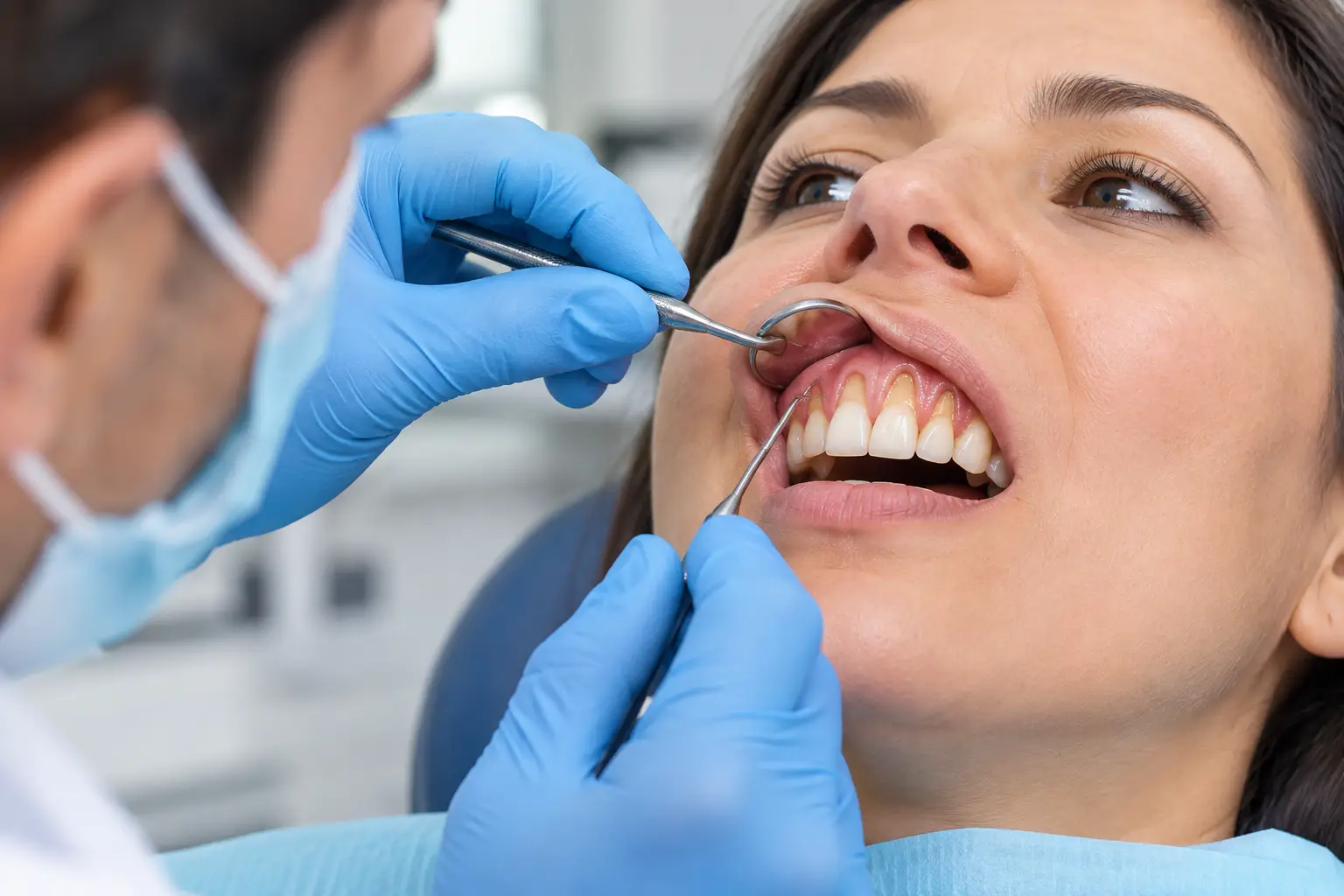
When a Gum Graft Is the Better Choice
Gum grafting remains the preferred route for many complex cases because it has a long record of predictable, lasting results. It may be recommended when a large area of root is exposed, when tissue needs to be rebuilt rather than repositioned, or when there is not enough healthy gum to work with. A periodontist who offers both procedures can compare them honestly for your situation instead of steering every patient toward the same technique.
Availability matters too. The Pinhole Surgical Technique is relatively new, and not every practice offers it. If a minimally invasive option is what you want, ask direct questions about your provider’s experience and how many cases similar to yours they have treated.
Questions to Ask at Your Consultation
- Which specific areas of recession need treatment, and how severe are they?
- Am I a candidate for both the pinhole technique and a gum graft?
- What result do you expect, and how will we measure it at follow-up visits?
- What will recovery look like with each option, including diet and brushing restrictions?
- What does the fee for each option include, and will my dental insurance cover any portion of it?
- If the first result is not enough, can the area be treated again?
Choosing With a Periodontist, Not a Search Engine
Both procedures have a place. The pinhole technique is appealing for its tiny entry points, fast healing, and lack of a donor site. A gum graft is appealing for its long-established track record and its ability to rebuild tissue when repositioning alone will not be enough. The right answer is the one that fits your clinical situation, and that requires an exam, not an internet comparison.
Patients in the Reading, PA area can review gum recession therapy options at Keystone Periodontal Group, where the team offers both grafting and minimally invasive care and can explain which approach suits your case.
Frequently Asked Questions
Is the pinhole technique better than a gum graft?
Not automatically. Clinical research shows the pinhole technique and connective tissue grafting deliver similar root coverage over time. The pinhole approach is less invasive, with no incisions, no sutures, and no donor site, and it heals faster. A graft has a longer track record and may work better for advanced recession or when more tissue has to be rebuilt.
What are the disadvantages of pinhole gum surgery?
It is relatively new, so long-term data is more limited than what exists for grafting. It depends on having enough healthy gum tissue to loosen and reposition, which rules out some advanced cases. It also does not address bone loss or active periodontal disease, which need separate treatment. Availability is another limit, since not every practice offers it.
How long does recovery take after each procedure?
Recovery is where the two options differ most. The pinhole technique is associated with a very fast recovery because the insertion points do not need sutures and tend to heal quickly. A gum graft involves two healing sites, including the donor area, so soreness and dietary restrictions tend to last longer. Your periodontist will give you a timeline based on your case.
Can I choose which procedure I want?
You can express a preference, but the clinical picture decides what is realistic. Recession depth, how much attached tissue remains, bone condition, and how many teeth are involved all influence the recommendation. A periodontist who performs both procedures can explain why one is favored for your case and what the trade-offs would be.
Do both procedures cover exposed tooth roots?
Yes. Both traditional gum grafting and the Pinhole Surgical Technique can cover exposed tooth roots and stop gum recession from getting worse, and research comparing them shows similar root coverage results over time. Covering the root protects it from infection and damage while also reducing the sensitivity that exposed root surfaces commonly cause.
Conclusion
Choosing between a gum graft and the Pinhole Surgical Technique depends on the severity of your gum recession, the amount of healthy tissue available, and your overall gum health. The pinhole technique may offer a less invasive recovery, while gum grafting can be a better option when more tissue needs to be rebuilt. A periodontal evaluation can help determine which approach fits your needs. If you are concerned about receding gums, schedule a consultation with Keystone Periodontal Group to discuss your treatment options.