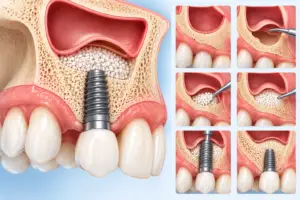
Each tooth sits in a socket of jawbone that anchors it in place. Dental practice pages describe jawbone loss as the process where that supporting bone begins to shrink or break down. Because bone remodels itself throughout life, the tissue around your teeth is never completely static. The question the published dental sources focus on is what pushes the supporting structure toward shrinking instead of being maintained.
The causes those sources list overlap in a few predictable places: gum disease, tooth extraction or tooth loss, dentures and bridgework, facial trauma, and aging. Treatment shows up far less often, mostly as early gum disease care that includes deep cleaning procedures such as scaling and root planing. Below is what the available dental sources attribute jawbone loss to, which risk factors they name, and how they frame prevention, with clear notes on where the published material stops short.
What Jawbone Loss Means in a Dental Context
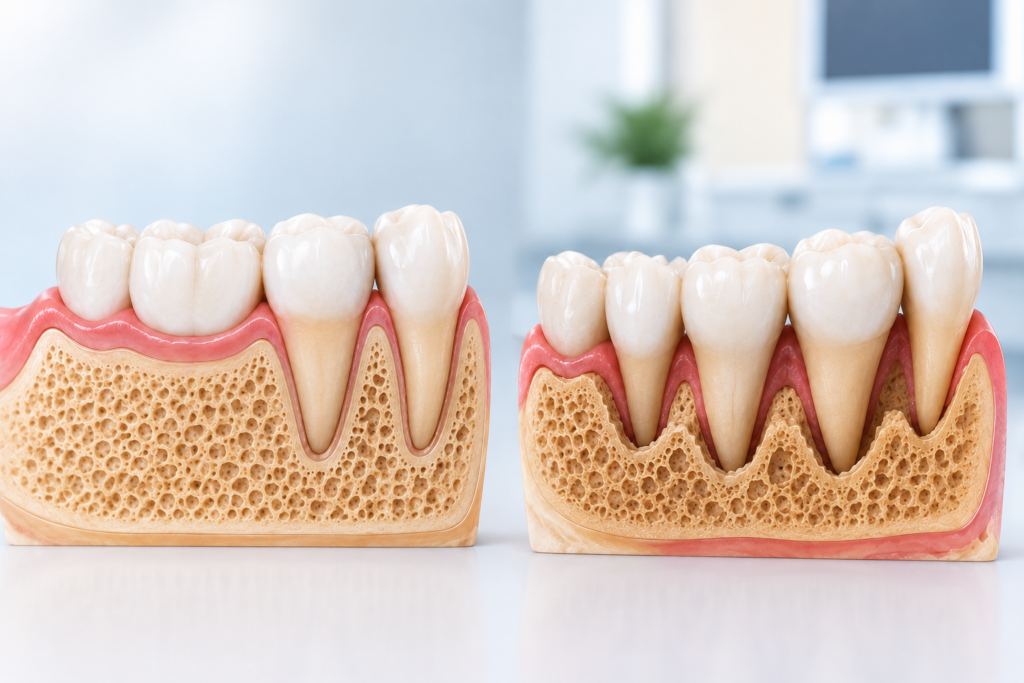
Bone loss in the jaw is described as arising from a range of conditions, including tooth loss, periodontal disease, and aging. The basic picture is straightforward: the jawbone that supports the teeth shrinks or breaks down, and the socket or ridge that once held a tooth has less material behind it.
Bone also remodels itself continuously, meaning older tissue is replaced by newer tissue over a lifetime. That natural turnover is why dental sources treat jawbone loss as a condition with contributing causes rather than a single event. Something shifts the area away from maintenance, and the supporting bone around a tooth, a denture, or a bridge is gradually reduced.
The Causes Dental Sources Cite Most Often
Across the practice pages reviewed for this topic, a handful of causes repeat. Not every source lists all of them, and not every source agrees on which matters most.
Periodontal (Gum) Disease
One practice page describes periodontal disease as one of the most common causes of bone loss in the jaw. Another frames it as the silent threat, a label that reflects a recurring theme in these sources: gum disease can progress while the supporting bone is being lost, so the change is not necessarily obvious early on. Gum disease appears on more of the reviewed pages than any other single item, and it also shows up on a risk factor list as a history of gum problems or gum disease, which places it in both the cause column and the risk column for those sources.
Tooth Extraction and Tooth Loss
A different practice page names tooth extraction as the most common cause of jawbone loss. That wording does not match the page that calls periodontal disease one of the most common causes, and the difference is worth noticing. The reviewed sources do not settle on one leading cause. What they do repeat is that losing a tooth, whether through extraction or another route, is consistently listed among the reasons jawbone deteriorates.
Dentures and Bridgework
Dentures and bridgework appear in cause lists under the heading hidden bone loss. The label signals that changes taking place underneath a restoration may not be apparent from the outside. These sources treat poorly fitting or long-standing prosthetic work as part of the same conversation as tooth loss, not as a separate category.
Facial Trauma
Facial trauma is listed separately and described as sudden bone loss, which distinguishes it from the gradual patterns associated with gum disease or tooth loss. A single injury can affect the bone directly, rather than through the slower routes the other causes follow.
Aging
Aging is named alongside tooth loss and periodontal disease as one of the conditions behind jawbone loss. In these sources it reads as a contributing factor rather than a standalone diagnosis, which is consistent with how the pages describe ongoing bone remodeling over a lifetime.
| Cause category | How the reviewed sources frame it |
|---|---|
| Tooth extraction | Labeled the most common cause by one practice page; tooth loss repeats across sources |
| Periodontal disease | Described as one of the most common causes; called the silent threat elsewhere |
| Dentures and bridgework | Grouped under hidden bone loss |
| Facial trauma | Framed as sudden bone loss |
| Aging | Listed as a condition behind jawbone loss |
Causes Named by Only One Source
Some items appear in a single practice page among the material reviewed. Those should be read as possible contributors rather than universally accepted causes.
- Misalignment, osteomyelitis, and tumors appear on one page alongside the more familiar causes.
- Developmental factors are listed by a separate source.
- A third page builds its list around risk factors rather than direct causes, naming excessive exposure to radiation and osteoporosis.
Because each of these items comes from one page, none of them carries the same weight in the published material as gum disease or tooth loss. They are worth asking about, not assuming.
Risk Factors That Raise the Odds
One practice page publishes a risk factor list rather than a cause list. It includes items a patient can act on and items they cannot.
- A history of gum problems or gum disease
- Excessive exposure to radiation
- Poor at-home oral hygiene
- Use of tobacco of any kind
- Alcohol abuse
- Osteoporosis
Risk factors describe conditions that make loss more likely. They are not the same as a diagnosis, and no source in the reviewed material says that having one of these guarantees bone loss will occur.
Prevention Steps Dental Practices Recommend
Only one source in the reviewed material gives explicit prevention measures. That page presents them as the best ways to prevent jawbone loss. No source claims these steps make loss impossible, so treat them as supportive habits rather than a guarantee.
- Eat a healthy diet.
- Maintain good oral hygiene habits.
- Treat gum disease as soon as it occurs.
The third item connects directly to the cause that appears most often in these pages. If gum disease is allowed to progress, the supporting bone is one of the structures at risk. Tobacco use and alcohol abuse sit on the risk factor list, so asking a clinician how those habits apply to your own situation is a reasonable step, especially if you also have a history of gum problems.

Treatment Options Discussed in Dental Sources
Treatment is the thinner half of the published material. Deep cleaning procedures such as scaling and root planing are referenced on a page discussing jawbone loss and periodontal disease. That page presents the procedure in the context of periodontal care, and it does not state that deep cleaning regrows jawbone. That distinction matters, because the same page links the procedure to gum disease care rather than to rebuilding bone.
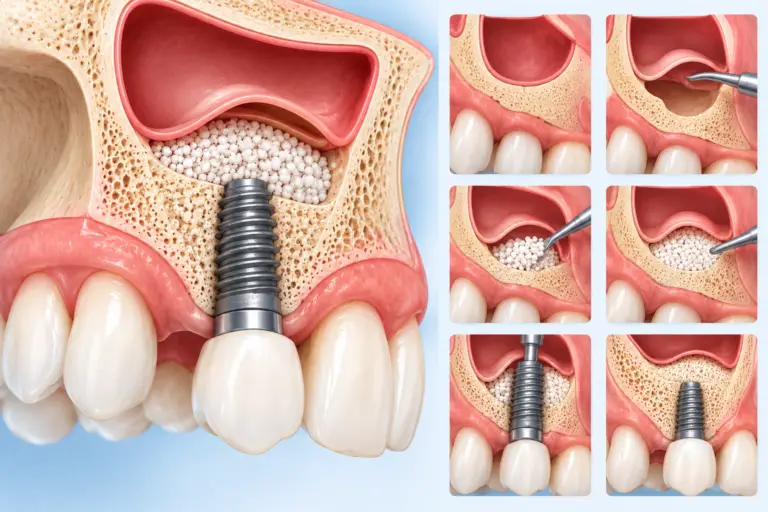
Elsewhere, one page title refers to available treatment solutions for jawbone loss, but its accompanying description lists causes only. It does not explain what those solutions involve. No source in the reviewed material provides bone grafting or implant details, success rates, candidacy criteria, timelines, costs, or insurance coverage.
Those sources also do not state whether jawbone can be regrown or restored. Those are exactly the questions a periodontist needs to answer for an individual mouth, because the answer depends on which cause is driving the loss and how far it has progressed. Any specific treatment claim is best verified with a licensed clinician rather than a marketing page.
Questions the Available Sources Do Not Answer
Readers searching for jawbone loss causes and treatment usually want more than cause lists. The material reviewed for this article leaves several gaps.
- No source gives a timeline for how quickly jawbone loss occurs after a tooth is extracted or lost.
- No source provides statistics or prevalence figures.
- The four common follow-up questions about preventing bone loss, regrowing bone around teeth, the causes of dental bone loss, and whether loss can be restored are not answered in the material reviewed.
- No named clinical authority appears in that material; the visible sources are individual dental and oral surgery practice websites.
That does not make the cause and risk factor lists useless. It does mean that timelines, outcomes, and treatment specifics belong in a conversation with a clinician who can examine your mouth.
When to Talk to a Periodontist
Frequently Asked Questions
What are the causes of dental bone loss?
Practice pages reviewed for this topic list tooth extraction or tooth loss, periodontal disease, dentures and bridgework, facial trauma, and aging. Single sources add misalignment, osteomyelitis, tumors, and developmental factors. Because the sources disagree about which cause is most common, the fair answer is that several conditions can contribute, and an examination identifies which one is affecting you.
How can jawbone loss be prevented?
One practice page lists eating a healthy diet, maintaining good oral hygiene habits, and treating gum disease as soon as it occurs among the best ways to prevent jawbone loss. A separate risk factor list names tobacco use, alcohol abuse, poor at-home hygiene, radiation exposure, osteoporosis, and a history of gum problems or gum disease. Those steps support oral health, but no source claims they make loss impossible.
Can jawbone loss be restored?
The reviewed sources do not answer that question. One page mentions deep cleaning such as scaling and root planing in the context of periodontal disease, and one page title refers to available treatment solutions, but neither description explains regrowth or restoration. Ask a periodontist directly about your case, and verify any claim you read online with a licensed clinician.
Is gum disease the most common cause of jawbone loss?
Not according to every source. One practice page describes periodontal disease as one of the most common causes of bone loss in the jaw, while another names tooth extraction as the most common cause. Gum disease does appear on more of the reviewed pages than any other single item, including one risk factor list, but the sources never settle on one leading cause.
What should I ask at a consultation?
Ask which cause appears to be driving the bone loss, which named risk factors apply to you, whether deep cleaning is appropriate, and what your options are if bone has already been lost. Ask what monitoring looks like going forward. Since the published sources offer no timelines, costs, or outcome figures, those details need to come from the clinician examining you.