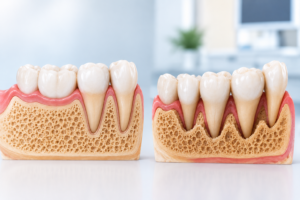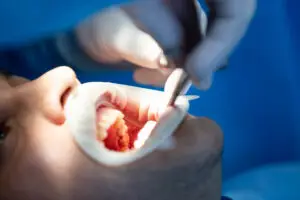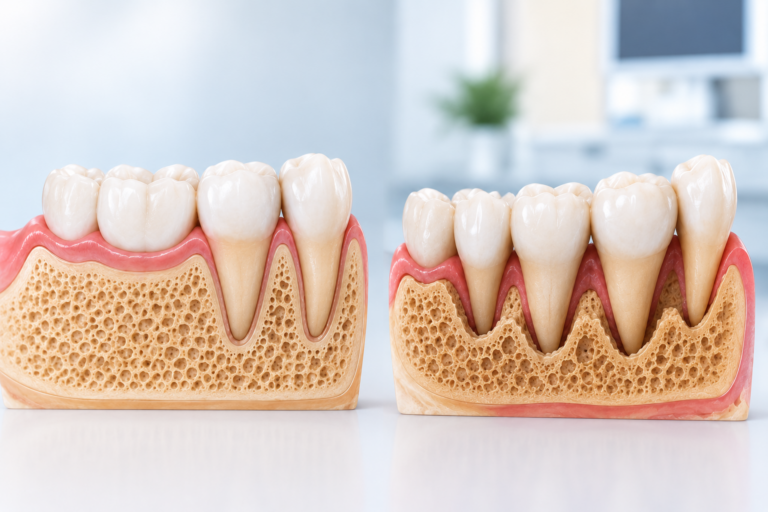

Periodontal diseases and dental implant challenges affect millions of people worldwide, often leading to tooth loss, discomfort, and reduced quality of life.
According to the World Health Organization, severe periodontal disease is the 11th most prevalent disease globally, impacting over 1 billion people. At the same time, dental implants have become one of the most reliable solutions for tooth replacement, with success rates ranging between 90% and 95% when supported by the right diagnostic and therapeutic technologies. These statistics highlight how vital it is for dentistry to continue evolving and integrating safer and more effective tools.
One such innovation is the use of ultrasound in periodontology and implantology. Unlike traditional imaging techniques that rely on radiation, ultrasound provides a non-invasive and radiation-free approach, delivering real-time visualization of tissues and assisting both diagnosis and treatment. This advancement has begun to reshape the way dentists and periodontists manage gum diseases, bone health, and dental implant procedures. Patients benefit from improved safety, higher accuracy, and greater comfort during treatments.
Key Takeaways
- Ultrasound is a safe, non-invasive tool in dentistry that avoids radiation exposure.
- It enhances diagnosis and treatment in both periodontal disease management and implant procedures.
- Applications include tissue visualization, bone assessment, surgical guidance, and healing support.
- Low-intensity pulsed ultrasound (LIPUS) plays a vital role in promoting bone regeneration and implant integration.
- Despite its benefits, challenges remain, and ongoing research continues to refine its applications.
What is Ultrasound in Periodontology and Implantology?

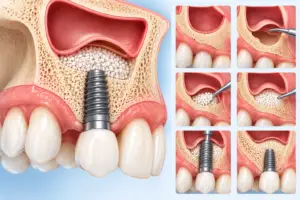
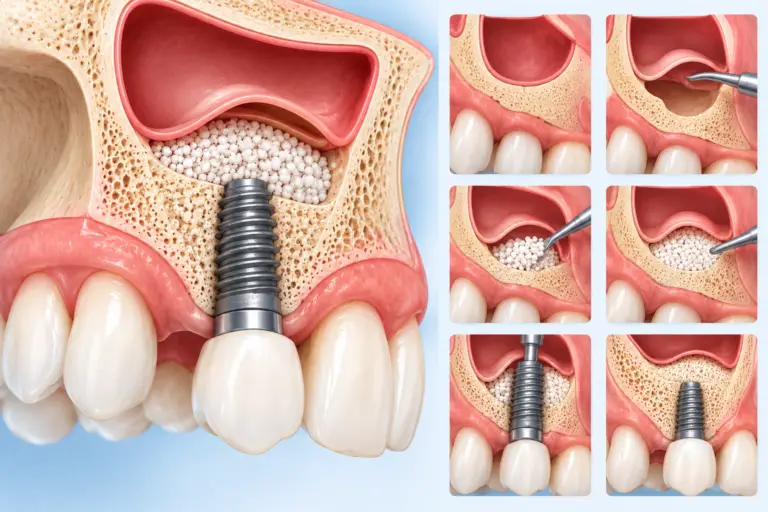
Ultrasound in dentistry refers to the use of sound waves to create images or deliver therapeutic effects within the oral cavity. In periodontology, it helps diagnose gum diseases and monitor bone and tissue health. In implantology, it supports implant placement, bone grafting, sinus lifts, and healing processes.
The key advantage of ultrasound is that it provides real-time imaging without ionizing radiation, making it safer than traditional X-rays. It is especially useful for repeat imaging during treatment monitoring. The integration of ultrasound with artificial intelligence has further enhanced its diagnostic accuracy, allowing clinicians to make informed decisions and achieve better clinical outcomes.
History of Ultrasound in Dentistry
Early Developments
Ultrasound was first introduced into medicine in the mid-20th century. By the 1940s and 1950s, it was being used in cardiology, radiology, and gastroenterology. Its non-invasive nature quickly gained attention as a safe imaging option.
Introduction to Dentistry
Dentistry adopted ultrasound later than other medical fields. Researchers recognized its potential for examining oral conditions and began adapting the technology for the smaller, more complex anatomy of the mouth. Teams such as those at the University of Alberta focused on miniaturizing ultrasound devices, opening the door for applications in periodontal care and implant planning.
Modern Applications
Advancements like low-intensity pulsed ultrasound (LIPUS) have expanded its role, especially in supporting bone healing and tissue regeneration after implant surgeries. Today, ultrasound has moved from a purely diagnostic role to becoming an integral part of treatment planning and execution.
Mechanisms of Action
Ultrasound works through three main effects on biological tissues:
Thermal Effects
When sound waves pass through tissues, they create localized heat. This controlled heating improves blood flow, supports healing, and helps manage infections by targeting diseased tissue without harming surrounding healthy structures.
Mechanical Effects
Ultrasound generates mechanical energy that leads to cavitation (formation of microbubbles) and acoustic streaming (fluid movement). These processes disrupt bacterial biofilms, aid in cleaning periodontal pockets, and stimulate cell activity for tissue repair.
Chemical Effects
Ultrasound influences cellular metabolism by producing chemical reactions that enhance collagen synthesis and promote regeneration. LIPUS, for example, helps bone stem cells transform into osteoblasts, which are essential for bone formation and implant stability.
Applications of Ultrasound
In Periodontology
- Real-time imaging of gum and bone structures.
- Early detection of periodontal diseases.
- Enhanced precision in scaling and root planing.
- Support for regenerative therapies through stimulation of tissue healing.
In Implantology
- Accurate bone measurements for implant placement.
- 3D ultrasound for better surgical planning compared to 2D radiographs.
- Guidance during sinus lifts and bone grafts.
- Support for osseointegration improves implant success rates.
- Reduced patient discomfort and faster recovery compared to traditional techniques.
Advantages of Ultrasound
- Radiation-free imaging: Safer than X-rays, especially for repeat examinations.
- Real-time visualization: Allows clinicians to adjust treatments instantly.
- Cost-effective and portable: Ultrasound equipment can be used in private practices and larger facilities.
- Clear imaging around implants: Avoids distortions caused by metal artifacts.
- Minimally invasive treatment support: High-intensity focused ultrasound (HIFU) shows promise for removing biofilms and aiding healing.
- Higher implant success rates: Studies suggest ultrasound-guided procedures can lead to less bone loss and better outcomes.
Limitations of Ultrasound
Despite its benefits, ultrasound use in dentistry has challenges:
- Study design limitations: Many studies focus on single implants, limiting broader conclusions.
- Operator bias: Results may vary depending on the clinician’s expertise.
- Technological constraints: The position of the probe may be restricted by oral anatomy.
- Safety concerns: Patients with pacemakers or similar devices may face risks.
- Need for more research: Larger studies and diverse populations are necessary to confirm long-term outcomes.
Research and Developments
Ultrasound research continues to evolve rapidly. Governments and institutions, such as the National Natural Science Foundation and universities in China and Canada, have invested in exploring its applications in dentistry. Studies are examining ultrasound’s role in biofilm removal, implant osseointegration, and AI integration for more accurate diagnostics.
Recent developments also include wearable ultrasound devices and AI-powered models that may soon allow personalized treatment planning and even home-based monitoring in the future. The field is moving toward making ultrasound a standard tool in routine dental practice.
Clinical Implications
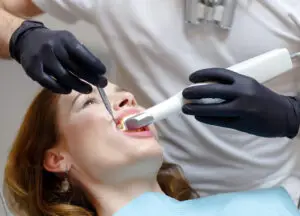
For periodontology, ultrasound offers efficient scaling and root planing with minimal damage to tooth structures. It helps manage inflammation, preserve dental function, and improve the quality of life for patients with gum disease.
For implantology, guided ultrasound supports flapless surgery, shortens surgical times, reduces pain, and ensures implants are placed in the most functional and aesthetic positions. Systematic reviews confirm that ultrasound-guided implant placement matches or exceeds traditional methods in terms of implant survival rates while improving patient comfort.
“I’ve treated enough patients, two‐legged and four‐legged, to know obesity sneaks in quietly. When your pet slows down, breathes hard after little play, or piles on weight despite no change in food, that’s your cue we need to check in.” — Dr. Amanda Clemente
Why Choose Keystone Periodontal
Keystone Periodontal, we combine advanced technologies like ultrasound with compassionate, patient-focused care. Our goal is to ensure every patient receives precise, safe, and comfortable treatment. We do not just treat symptoms; we take the time to understand your individual needs and design solutions that restore both health and confidence. With expertise in periodontal care and dental implants, our team is committed to using innovative approaches that enhance healing, minimize risks, and deliver lasting results. Choosing us means trusting a practice that values your comfort, safety, and smile.
The Takeaway
Ultrasound in periodontology and implantology represents a remarkable step forward in modern dentistry. By offering radiation-free imaging, better diagnostic precision, and enhanced therapeutic benefits, it supports both clinicians and patients in achieving optimal outcomes. While limitations remain, ongoing research and technological advancements promise to expand its applications and reliability. For patients seeking safer, more effective solutions to periodontal and implant challenges, ultrasound is shaping the future of care.
Frequently Asked Questions
1. Is ultrasound safe for dental treatments?
Yes, ultrasound is considered safe because it does not use ionizing radiation. However, patients with pacemakers or implantable devices should discuss risks with their dentist.
2. How does ultrasound help in dental implant procedures?
It allows accurate bone measurements, guides implant placement, supports bone healing, and reduces surgical trauma compared to traditional methods.
3. Can ultrasound detect gum disease early?
Yes, ultrasound provides real-time imaging of periodontal tissues, helping clinicians identify early signs of disease before significant damage occurs.
4. Does ultrasound replace X-rays in dentistry?
Not entirely. While ultrasound avoids radiation and offers many benefits, X-rays are still used in some cases. Ultrasound is increasingly being used as a complementary tool.
5. What is LIPUS in dentistry?
LIPUS stands for low-intensity pulsed ultrasound. It helps stimulate bone regeneration and improves implant integration, supporting faster and stronger healing.