Dental implants are designed to replace the root portion of a missing tooth with a metal post that supports a crown, bridge, or other restoration. For the implant to stay secure, it needs a foundation of healthy jawbone. When that bone is too thin, too soft, or already lost, bone grafting can make implant treatment possible.
Bone grafting for dental implants is a common procedure that strengthens the jaw and prepares it to hold an implant. Understanding how dental implant bone grafting works, what materials are used, and what the healing process involves can help you feel more confident about the treatment plan ahead.
Why Bone Grafting Is Needed for Dental Implants
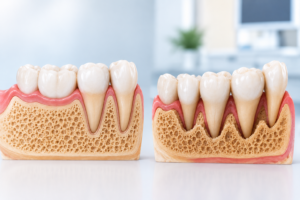
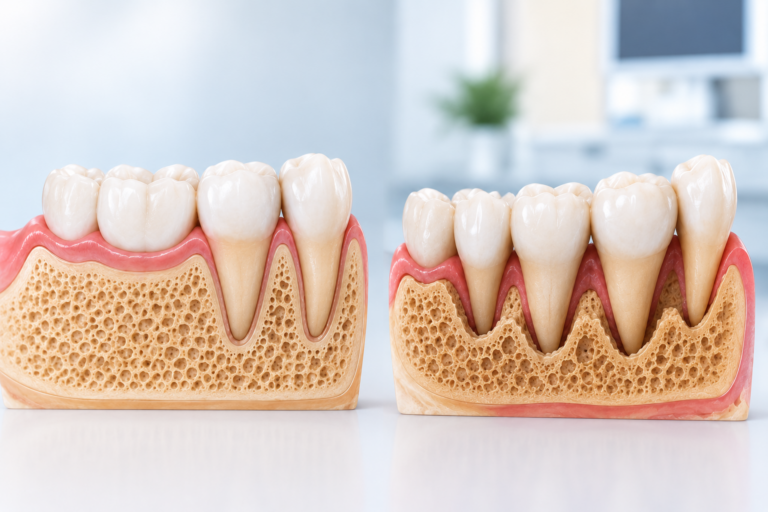
A dental implant is placed directly into the jawbone, where it must fuse with the surrounding bone to remain stable. If the jawbone is not thick enough or is too soft, the implant may fail to hold. A dental bone graft replaces missing or lost bone in the jaw, creating a stronger base for the implant to attach to.
Bone loss can happen for several reasons. When a tooth is missing, the bone that once supported it begins to shrink because it no longer receives stimulation from the tooth root. Periodontal disease can also destroy the bone that holds teeth in place. In other cases, the natural shape of the jaw simply does not provide enough bone volume for an implant.
In dentistry, the most common use of bone grafting is to restore the edentulous area of a missing tooth so an implant can be placed. Without grafting, many patients would not be candidates for dental implants at all.
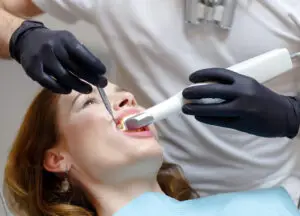
During a consultation, your periodontist evaluates the thickness and quality of your jawbone to determine whether a graft is needed. If the jawbone is not thick enough or is too soft, bone grafting may be recommended before dental implant surgery can proceed. This evaluation is the first step in planning treatment that is safe and predictable.
Types of Bone Graft Material
Bone graft material comes from several sources, and the type used depends on your specific needs. Healthcare providers commonly use FDA-cleared donor material, synthetic material, or your own extracted tooth.
- FDA-cleared donor material: processed bone from a human donor that is cleaned and tested for safety before use.
- Synthetic material: a man-made bone substitute designed to encourage your body to form new bone in the grafted area.
- Your own extracted tooth: a technique called autogenous dentin grafting uses your natural tooth, which is processed and placed back into the jaw to support bone growth.
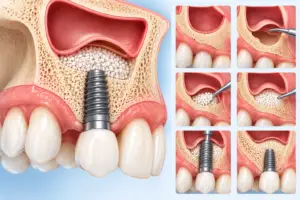
No matter which material is selected, the graft works as a framework. Your body uses that framework to generate new, living bone in the area where the implant will eventually be placed. The graft material itself becomes incorporated into the jaw over time.
Your periodontist will recommend the material that best fits your clinical needs, your health history, and the size of the area being rebuilt.
The Bone Grafting Procedure
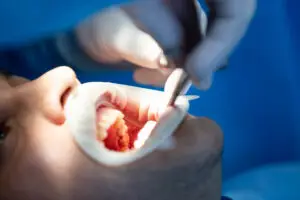
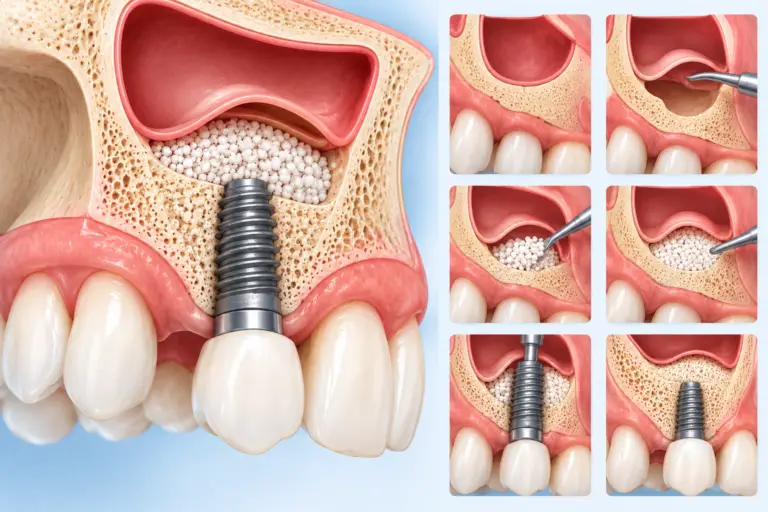
Bone grafting for dental implants is usually performed with local anesthesia, meaning you are awake but the treatment area is completely numb. The timing of the graft depends on your individual treatment plan. In some cases, the graft is placed at the time of tooth extraction to prepare the site for a future implant. In other cases, the graft is done as a separate procedure before implant placement begins.
When the bone defect is large or the implant cannot be made stable immediately, a staged approach is safer. The graft is placed first, and the implant is placed after the bone has healed, which is often three to six months later. This gives the grafted bone time to mature and integrate with your existing jawbone before it is asked to support an implant.
Healing Timeline and Osseointegration
After a bone graft, initial healing takes about one week. Most people recover completely from the procedure within six to eight weeks. However, the graft itself takes much longer to fully integrate into the jaw. Complete healing of the bone graft can take up to one year.
The key process during this time is called osseointegration. This is the bond that forms between the grafted material and your existing bone, turning them into one solid structure. A graft generally needs three to six months to heal through osseointegration before an implant can be placed. Waiting for this bond is essential because the implant needs a stable, mature foundation to remain secure for years to come.
| Phase | What Happens | Typical Timeframe |
|---|---|---|
| Initial healing | Recovery from the graft procedure begins | About one week |
| Full recovery from procedure | Soft tissue heals and normal activities resume | Within 6 to 8 weeks |
| Osseointegration | Grafted material bonds with the existing jawbone | 3 to 6 months before implant placement |
| Complete graft healing | The graft is fully incorporated into the jaw | Up to one year |
Your periodontist will monitor the healing process and may use imaging to confirm that the graft has integrated before moving forward with implant placement. This careful approach is what makes dental implant bone grafting so reliable for rebuilding the jaw.
What to Expect From the Full Treatment Process
The complete process of bone grafting followed by dental implant placement happens in clear phases. First, the bone graft is placed. Next, you wait for healing and osseointegration. Once the bone is ready, the implant is placed. Finally, after the implant fuses with the bone, the restoration is attached.
This timeline is different for every patient. Some people may have the graft placed at the time of extraction, which shortens the overall treatment time. Others need a longer waiting period before the implant can be placed. The staged approach is chosen specifically when stability cannot be achieved immediately or when the defect is large.
Throughout the process, the goal is the same: create enough strong, healthy bone to support a dental implant that will function like a natural tooth. Patients who follow their recovery instructions and attend follow-up appointments give their graft the best chance of integrating fully.
Bone Grafting and Dental Implant Success
Bone grafting plays an important role in preparing the jawbone for dental implants when there is not enough natural bone to provide stable support. By rebuilding and strengthening the bone, the procedure creates a solid foundation for implant placement and helps improve the long-term success of treatment.
Every patient’s situation is unique, so the type of grafting procedure and treatment approach will depend on the condition of the jawbone and the overall treatment plan. A thorough evaluation by a periodontal specialist can determine whether bone grafting is needed before implant placement.
Frequently Asked Questions
Is bone grafting for dental implants painful?
Bone grafting is typically performed with local anesthesia, so the procedure itself is done while the treatment area is numb. After the numbness wears off, some discomfort is normal during the first week of healing. Your periodontist can provide specific guidance for managing any discomfort during recovery.
How long does a bone graft take to heal before an implant is placed?
Initial healing after a bone graft takes about one week, while complete recovery from the procedure can take several weeks. However, the graft must bond with your existing bone before an implant can be placed. The exact healing time depends on the type of graft and your individual treatment needs.
Can bone grafting be done at the same time as tooth extraction?
Yes, a bone graft can be placed at the time of tooth extraction to prepare the site for future implant placement. However, when the defect is large or stability cannot be achieved immediately, a staged approach may be recommended. In that case, the graft is placed first and the implant is placed after the bone has healed.
What materials are used for bone grafting in dental implants?
Bone grafting materials can come from different sources, including your own bone (autograft), donor bone (allograft), animal-derived bone (xenograft), or synthetic materials. Your periodontist will choose the most suitable option based on your clinical condition and treatment goals.
Conclusion
Bone grafting provides a strong foundation for dental implants when jawbone loss occurs. It rebuilds bone, supports healing, and ensures long-term implant stability. Treatment depends on bone level, tooth location, and individual needs. A periodontal evaluation helps determine necessity and timing. With proper planning and care, bone grafting can restore your smile effectively. Contact Keystone Periodontal Group today for a personalized evaluation and expert guidance on your dental implant and bone grafting options. Schedule your consultation with us today