
A beautiful smile can do wonders for your confidence, but not everyone is born with perfectly balanced teeth and gums. If you’ve ever looked in the mirror and wished your smile looked just a little different, whether it’s due to excess gum tissue or a tooth that seems too short, you’re not alone. Luckily, modern dentistry offers solutions to these concerns, with two popular procedures standing out: crown lengthening and gum contouring.
Both crown lengthening and gum contouring help address issues with the gums and teeth, but each serves a unique purpose. In this blog, we’ll walk you through the differences between these two treatments, explore their benefits, and help you decide which procedure is right for you. If you’ve ever wondered what sets these treatments apart, keep reading to discover how they can transform your smile.
Key Takeaways
- Crown lengthening is a procedure that removes excess gum tissue (and sometimes bone) to expose more of the tooth structure. It’s often necessary for functional reasons, such as preparing a tooth for a crown or filling.
- Gum contouring is mainly a cosmetic procedure that reshapes the gum line to enhance the aesthetic of a person’s smile, often used for those with a “gummy smile.”
- While both treatments have a positive impact on a smile, crown lengthening can be more comprehensive, addressing both aesthetic and functional concerns, while gum contouring focuses primarily on the look of the gums.
- Both procedures have relatively short recovery times, but healing can vary depending on the extent of the surgery.
What Is Crown Lengthening?

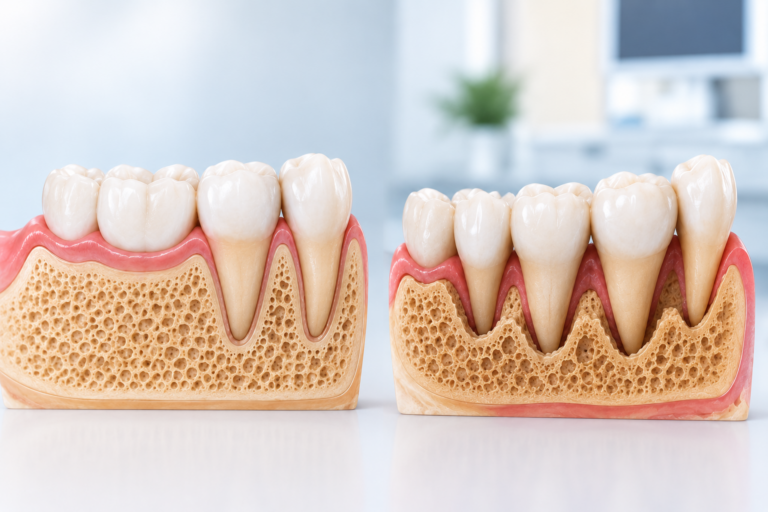
Crown lengthening is a surgical dental procedure designed to expose more of a tooth’s structure by reshaping the gum tissue and, if necessary, the underlying bone. This procedure can be performed for both cosmetic and functional reasons.
For example, if your tooth appears too short or if there’s not enough visible tooth structure to place a crown or a veneer, crown lengthening can solve these issues. It’s not just about making your smile look better. It can also prepare a tooth for restorative treatments.
Why It’s Done
Crown lengthening is often medically necessary to create space for a crown or filling. In many cases, it’s required when gum disease has hidden parts of the tooth beneath the gumline. It can also be performed for functional purposes, like ensuring proper tooth structure for a dental restoration.
Additionally, it can address a gummy smile, where too much of the gum is visible when you smile. In these cases, crown lengthening can help balance the proportion of teeth to gums, giving you a more even smile.
What Is Gum Contouring?
Unlike crown lengthening, gum contouring is a cosmetic procedure focused primarily on improving the aesthetics of the smile. This procedure reshapes the gum line, typically for individuals who are unhappy with their gummy smile or uneven gums. It’s all about creating a more symmetrical, well-proportioned smile.
Why It’s Done
People who feel self-conscious about the appearance of their gums often seek gum contouring. If your gums extend lower than you desire, making your teeth appear too short, gum contouring can help. It’s also beneficial for those with uneven gum lines, creating a more balanced appearance between the gums and teeth.
Unlike crown lengthening, gum contouring does not usually address functional issues or restorative needs. It’s purely for enhancing the smile’s aesthetic.
Crown Lengthening vs. Gum Contouring: Key Differences
Now that you know what each procedure involves, let’s dive deeper into the main differences between crown lengthening and gum contouring. Understanding these distinctions will help you determine which option best suits your needs.
1. Functional vs. Aesthetic Focus
- Crown Lengthening serves both functional and aesthetic purposes. While it can certainly improve the look of your smile, it’s often performed for reasons like preparing a tooth for restorative work (e.g., crowns, fillings), exposing more of a tooth structure, or treating gum disease.
- Gum Contouring, on the other hand, focuses primarily on cosmetic improvements. It’s often performed for people who want to enhance their smile by reshaping the gum line. The primary goal is symmetry and balance, not functional restoration.
2. Procedure and Healing
Both procedures are minor surgeries performed by periodontists or dental specialists, but the recovery times can differ slightly.
- Crown lengthening involves the removal of both gum tissue and, in some cases, bone. This procedure requires more extensive healing, and patients may need to avoid strenuous activities for several weeks to allow for proper healing.
- Gum contouring is less invasive, often requiring only reshaping of the gums. Recovery time is usually shorter, with most patients returning to normal activities within a week.
3. Cost Considerations
- Gum contouring is generally classified as a cosmetic procedure, meaning it is often not covered by dental insurance unless it’s deemed medically necessary.
- Crown lengthening may be covered by insurance, especially if it is linked to a functional concern, such as preparing a tooth for a crown.
4. Long-Term Outcomes
- Crown lengthening not only improves the appearance of your teeth but also plays a role in the long-term functionality of your oral health. It helps restore the tooth structure needed for crowns and other restorations.
- Gum contouring, while providing an enhanced aesthetic, does not offer the same level of functional benefits. It’s all about visual improvements, which can greatly boost a patient’s confidence and satisfaction with their smile.
Whether it’s enhancing your smile’s appearance or ensuring the health and function of your teeth, both crown lengthening and gum contouring play vital roles. At Keystone Periodontal, we tailor each treatment to fit your unique needs, helping you achieve a smile that’s both beautiful and healthy.- Dr. Amanda Clemente
Why Choose Us?
Keystone Periodontal, understands that each smile is unique, and that’s why we offer personalized treatments to meet your specific needs. Whether you’re looking to address functional concerns with crown lengthening or enhance the aesthetics of your smile through gum contouring, our experienced team is here to guide you every step of the way.
We use the latest technologies and techniques to ensure that your procedure is both effective and comfortable. Our team is dedicated to providing high-quality care, focusing on achieving the best results while minimizing discomfort. Our personalized approach ensures that we fully understand your goals and concerns before recommending a course of treatment. With a proven track record and a commitment to patient satisfaction, you can trust us to deliver a smile you’ll be proud to show off.
Final Takeaway
Deciding between crown lengthening and gum contouring ultimately depends on your personal goals and dental needs. If you’re looking for a procedure to improve both the function and appearance of your smile, crown lengthening may be the best option. It’s an ideal solution for patients needing restorative work or those who struggle with a gummy smile.
On the other hand, if your primary concern is enhancing the aesthetic balance of your smile, gum contouring may be the perfect fit. This procedure is particularly effective for individuals who feel self-conscious about the appearance of their gums.
A thorough consultation with a dental professional is essential to determine which procedure will best suit your needs. By discussing your goals, oral health, and concerns, you’ll be able to make an informed decision that will lead to a more confident, radiant smile.
Frequently Asked Questions
Is crown lengthening painful?
Most patients experience mild discomfort during the recovery process. Your dentist will provide pain management options to ensure you’re comfortable during healing.
Can gum contouring fix a gummy smile?
Yes, gum contouring is one of the most effective treatments for a gummy smile, as it reshapes the gum line to expose more of the teeth.
How long does it take to recover from crown lengthening?
Recovery typically takes about 1-2 weeks, but complete healing can take several months depending on the extent of the procedure.
Will gum contouring improve my oral health?
While gum contouring is primarily cosmetic, it can improve your overall oral health by making it easier to clean your teeth and gums, thus reducing the risk of gum disease.
How do I know which procedure is right for me?A consultation with your dentist will help determine whether you need crown lengthening for functional reasons or gum contouring for cosmetic purposes. Your dentist will discuss your goals, dental health, and recommend the best treatment.