
Getting a gum disease diagnosis raises an immediate question: is this something that goes away, or something you live with from now on? The answer is not a simple yes or no, and anyone who gives you one without asking about your specific diagnosis is skipping an important step. Gum disease develops along a spectrum, and where you fall on that spectrum changes everything about your prognosis.
Here is the honest version. The earliest form of gum disease is usually reversible. The more advanced form is not fully curable, but it can be controlled, often for decades, with the right treatment and follow-up care. Understanding the difference between those two outcomes is the key to knowing what to expect.
The Short Answer Depends on Which Stage You Have
Gum disease is not one condition. Gingivitis is the mild, early form, while periodontitis is the advanced form that affects the bone and tissues supporting your teeth. Learn more about the symptoms and treatment of periodontal disease to understand how gum disease can progress and why timely care matters.
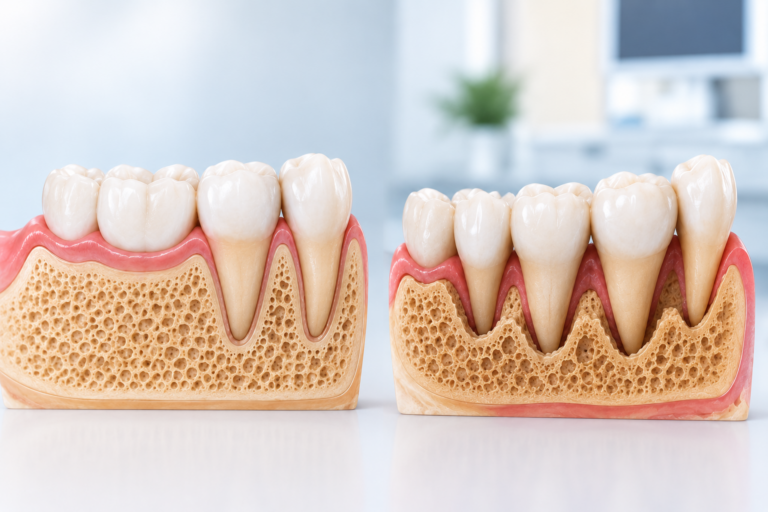
That distinction matters because the two stages behave differently. Gingivitis can often be reversed in a matter of weeks with proper care. Periodontitis is not fully curable, but it can be controlled over months of treatment and ongoing maintenance. The reason for the difference comes down to what has already been lost.
Why Periodontitis Is Usually Described as Manageable Rather Than Curable
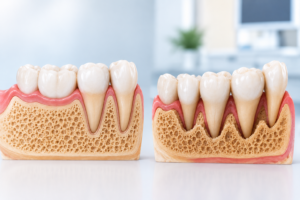
The structural support around your teeth, meaning the gum tissue and the bone that holds teeth in place, does not grow back on its own once it is destroyed. That is the core of the problem. Treatment can stop the infection from doing further damage, calm the inflammation, and help the remaining tissue reattach and heal, but it cannot rebuild support that is already gone.
This is why so many clinicians frame periodontitis as a condition you manage rather than one you eliminate. It is similar in spirit to other chronic conditions where the goal is control: you reduce the active disease, you keep it from progressing, and you monitor it closely so it does not flare back up. The good news is that control is a genuinely good outcome. People with well-managed periodontitis can keep their natural teeth and their oral function for a long time.
The CDC takes a similarly practical position, describing periodontal diseases such as gingivitis and periodontitis as largely preventable and treatable. The emphasis on prevention and treatment, rather than on a one-time cure, reflects how the disease actually behaves.
Gingivitis Versus Periodontitis: What Changes
The table below summarizes how the two stages differ in terms of reversibility, timeline, and what treatment is trying to accomplish. This is the single most useful comparison to keep in mind when you are trying to understand your own diagnosis.
| Factor | Gingivitis | Periodontitis |
|---|---|---|
| What is affected | Gums only, with inflammation and bleeding | Gums plus the bone and tissue supporting teeth |
| Reversibility | Usually reversible | Not fully curable, but controllable |
| Typical timeline | Often reversed in weeks with proper care | Controlled over months, with long-term maintenance |
| Structural support | Generally intact | May already be lost and does not return on its own |
| Main goal of care | Reverse the inflammation and prevent progression | Stop progression, reduce infection, maintain stability |
What Treatment Is Actually Designed to Do
Treatment for periodontal disease has a few clear jobs, and knowing them helps you judge whether your care plan makes sense.
- Reduce the inflammation and infection in the gum tissue.
- Remove the bacterial buildup that keeps driving the disease.
- Use antibiotics in some cases to help bring the infection under control.
- Monitor the gums and supporting bone over time so any change is caught early.
- Prevent the disease from advancing and costing more structural support.
The right treatment depends on the severity of periodontal disease and the condition of the gums, teeth, and supporting bone. That is why a thorough periodontal evaluation is an important first step. Even when two patients have the same diagnosis, their treatment plans may differ based on how far the disease has progressed and how much damage has occurred.
One Viewpoint: Treating the Bacteria at the Source
Not everyone in the field describes periodontitis the same way. One clinical perspective argues that periodontitis can be cured when it is treated at its source, meaning the specific bacteria and pathogens causing the infection, rather than only managing symptoms. That approach relies on microscopic bacterial analysis to identify the harmful organisms present and then builds a personalized treatment plan around those specific pathogens, combining non-surgical treatment with targeted bacterial reduction and professional monitoring.
This is a meaningful idea because it focuses attention on why the infection started and whether it is truly being addressed. At the same time, it is a viewpoint rather than a universal consensus. Many periodontists and dental schools continue to frame periodontitis as a condition that is managed rather than cured, precisely because lost bone and gum support cannot be restored by eliminating bacteria alone. Both ideas can be true at once: knocking down the bacteria is essential, and the structural damage it caused still needs to be accounted for.
What Influences How Well Your Gum Disease Is Controlled
Two people can follow similar treatment plans and get different results. Several factors tend to explain why.
- How early the disease was caught. The earliest stage can usually be treated and reversed before it evolves, which makes early detection far more valuable than any advanced treatment.
- Your daily oral hygiene. Brushing and flossing consistently is repeatedly identified as a core part of managing and preventing gum disease.
- Your overall health. The CDC ties gum disease prevention and treatment to good oral hygiene and general health together, not oral care alone.
- Ongoing professional care. Regular cleanings and monitoring are part of the plan, not an optional extra.
- Your individual susceptibility. Some people are simply more prone to this type of infection, which means their maintenance plan matters more, not less.
What the Timeline Usually Looks Like
If you have gingivitis, the outlook is encouraging. This mild form of gum disease can usually be reversed once you start brushing, flossing, and receiving regular cleanings from a dentist. Reversal often happens within weeks rather than months, which makes gingivitis a genuine turning point if it is addressed.
With periodontitis, expect a longer horizon. Control is typically achieved over months of treatment, and the maintenance phase that follows does not really end. That can sound discouraging, but it is the same pattern as any chronic condition that is well handled. The appointments become routine, the daily habits become automatic, and the disease stays quiet.
What you want to avoid is treating a course of treatment as a finish line. Periodontal disease that is controlled but unwatched tends to come back, which is why professional monitoring is built into every credible plan.
Questions Worth Asking at Your Consultation
Your periodontist can give you a far more specific answer than any general article, because the answer depends on your own gum measurements, bone levels, and health history. Bringing a short list of questions helps you get the details that matter.
- Which stage of gum disease do I have, gingivitis or periodontitis?
- Has any structural support already been lost, and how much?
- What is the goal of the treatment you are recommending: reversal or control?
- How will we measure whether treatment is working?
- What does my maintenance schedule look like going forward?
- What should I do at home between visits?
Frequently Asked Questions
Can periodontal disease be cured completely?
Once the bone and gum tissue supporting your teeth have been lost, that support does not grow back on its own, so periodontitis is generally described as controllable rather than curable. The infection and inflammation can be brought under control and kept stable, often for many years, but it requires ongoing professional care and consistent daily hygiene to stay that way.
Is gingivitis reversible?
Yes. Gingivitis is the mild, early form of gum disease, and it can usually be reversed once you start brushing, flossing, and receiving regular cleanings from a dentist. Reversal often happens within weeks with proper care. Because gingivitis can progress into periodontitis, treating it promptly is the best opportunity you get to stop the disease entirely.
How long does it take to control periodontitis?
Control is typically achieved over months rather than weeks, and it continues with maintenance visits afterward. The exact timeline depends on how advanced the disease is, how your gums respond, and how consistently you keep up with home care and professional monitoring. Your periodontist can give you a realistic schedule after assessing your specific condition.
Does treatment eliminate the bacteria that cause gum disease?
Treatment aims to reduce the bacterial infection driving the disease, and antibiotics are used in some cases to help. Some clinicians go further by using microscopic bacterial analysis to identify specific pathogens and target them directly with a personalized plan. Even with that approach, professional monitoring remains important because bacterial populations can rebuild over time.
What happens if periodontal disease is left untreated?
The concern with untreated periodontitis is continued loss of the bone and tissue that hold your teeth in place, which cannot be regrown afterward. The earliest stage is far easier to turn around, which is why bleeding, swollen gums, bad breath, and loose teeth are worth evaluating promptly rather than watching for a while to see if they settle down.
Take the Next Step for Healthier Gums
Periodontal disease does not have to mean losing your teeth or living with ongoing discomfort. Gingivitis can often be reversed, while periodontitis can be controlled with the right treatment and consistent maintenance. The earlier you understand your condition, the more options you may have for protecting your gums, teeth, and supporting bone. If you are dealing with bleeding gums, swelling, bad breath, gum recession, or other signs of gum disease, do not wait for the problem to worsen. Schedule a periodontal evaluation with Keystone Periodontal Group to understand your current gum health and get a treatment plan based on your specific needs.